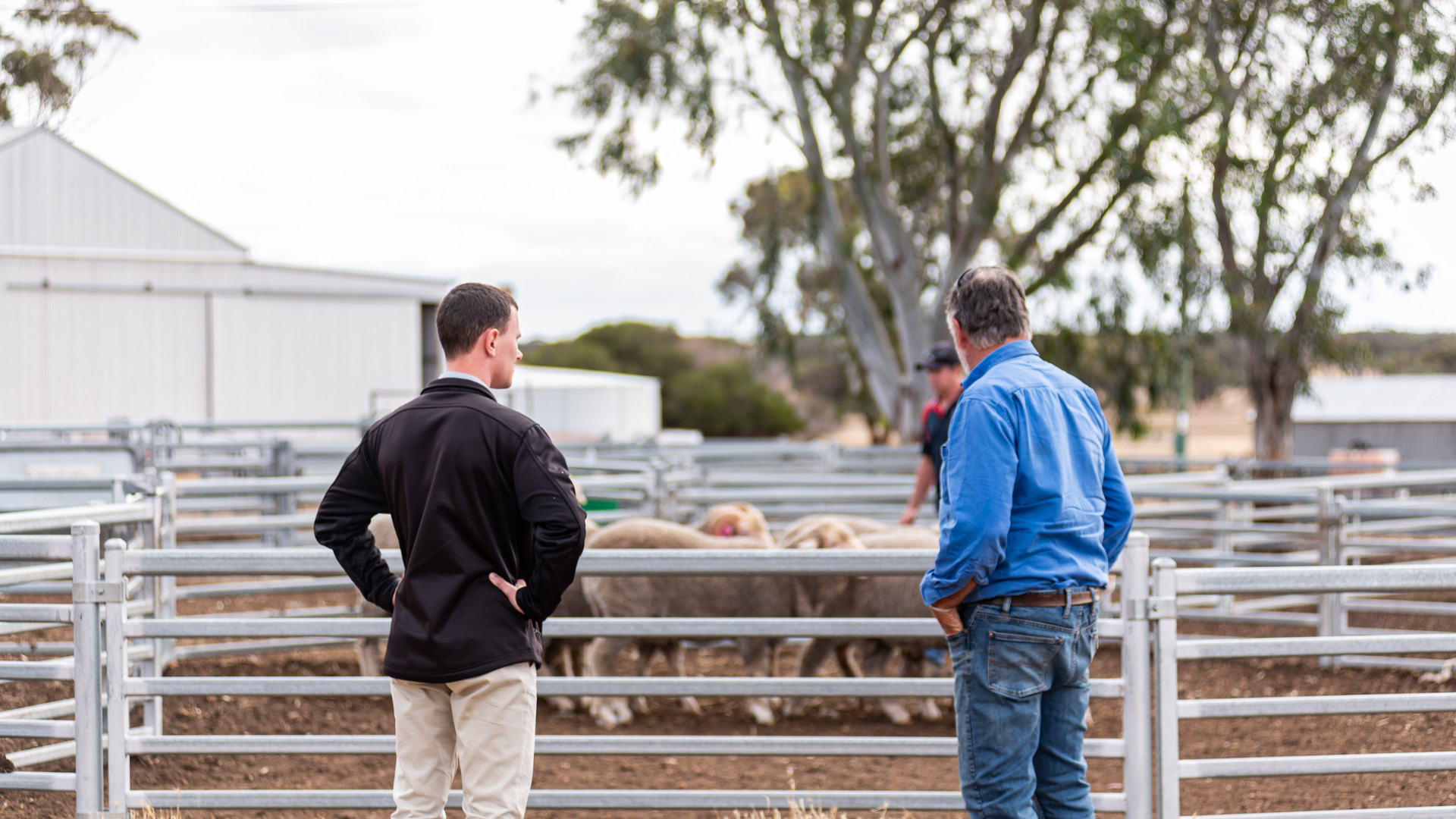
If you are like many, you may have heard about the government grants that are available to farmers for the phase out of live exports. Potentially, you have heard about the grants, thought to yourself “I’ll look into that,” but then got busy with spraying, selling lambs and preparing for harvest, then forgot all about them, until you heard that one had shut on the 22nd of October.The other was shutting on the 1st of December (perfect timing).
So now that you have certainly missed the cutoff to get your applications in for round 1, you might be asking yourself, “Have I missed the boat?”.
The short answer is no, but timing and preparation are everything.
What Grants?
Funding has been made available at the state and federal level to farmers, and supply chain businesses, to transition away from a reliance on the live export industry before the ban in May 2028.
There are two key grants that you could use to assist your business currently, and I will compare the key details of these in a table below:
- “Supply Chain Capacity Program” – This is the West Australian only grant administered by DPIRD and the Business Development Corporation.
- “Farm Business Transition Program” – This is the Australiawide grant, administered by the Australian government’s community grants hub.
| Feature | Supply Chain Capacity Program | Farm Business Transition Program |
| Purpose | Capital works to strengthen the West Australian sheep supply chain to prepare for ban. | Support producers to plan and implement alternative systems to transition away from live export. |
| Funding Available | $50,000–$2M per applicant. | Up to $75,000 per applicant. |
| Co-contribution | Must co-contribute 1:1 cash contribution (if you apply for $50,000 of funding, you have to provide $50,000 of your own funds). | Must co-contribute 1:1 cash contribution (if you apply for $50,000 of funding, you have to provide $50,000 of your own funds). |
| Eligible Activities | Feedlot development, infrastructure upgrades, on-farm finishing facilities, heavy vehicle access upgrades. | Business planning, infrastructure upgrades, technology adoption, pasture improvements, professional services and training. |
| Eligibility | Sheep producers in WA, 2+ years of operation, ABG & GST registered, proof of financial viability. | Must have participated in live export in past 3 years (must provide proof), ABG & GST registered. |
| Round 2 Expected | Feb/March 2026 (confirmed via phone call with DPIRD). | Mid 2026 (confirmed via email with community grants hub). |
| Application Requirements | Business and financial details, detailed project plan including budget and timeline, evidence of co-contribution and quotes, risk mitigation factors. | Business plan (optional), quotes, proof of live export participation (waybills/contracts). |
What to consider for Round 2
To best position your business to secure one or both grants when round 2 eventually opens, you will need to do the following:
- Align your proposal with the goals of the grants – Transitioning your business away from the live export market or strengthening the overall domestic supply chain for sheep.
- Create a clear business case for how your project improves capacity, efficiency, and resilience, as well as detailing the economic benefits (increased employees, increased profit) that your project will generate.
- Gather and compile all the relevant details required for the project plan. From a budget, project timeline, evidence of quotes, and regulatory considerations.
- Gather all your supporting documents to prove your eligibility, like two years of financials or proof of participation in the live export industry.
Should you apply?
These grants will require you to do some work, may take up to 6-8 hours of effort, and you will not be guaranteed to receive the grants at the end of the process. So, the question is, is it worth it?
If you see livestock maintaining a strategic and economic fit in your business going forward, you currently rely or use the live export industry as part of your marketing strategy, and you have planned on investing in infrastructure, technology adoption, pasture improvements, or professional services surrounding your livestock system, this is an excellent opportunity to have at least half of the cost covered by someone else!
Bottom line?
If you meet the criteria mentioned above, start planning now while you are sitting on your header, in the truck, or in the tractor. If you can start to prepare now, it will put you front and centre to secure some funding once round 2 of both grants open.