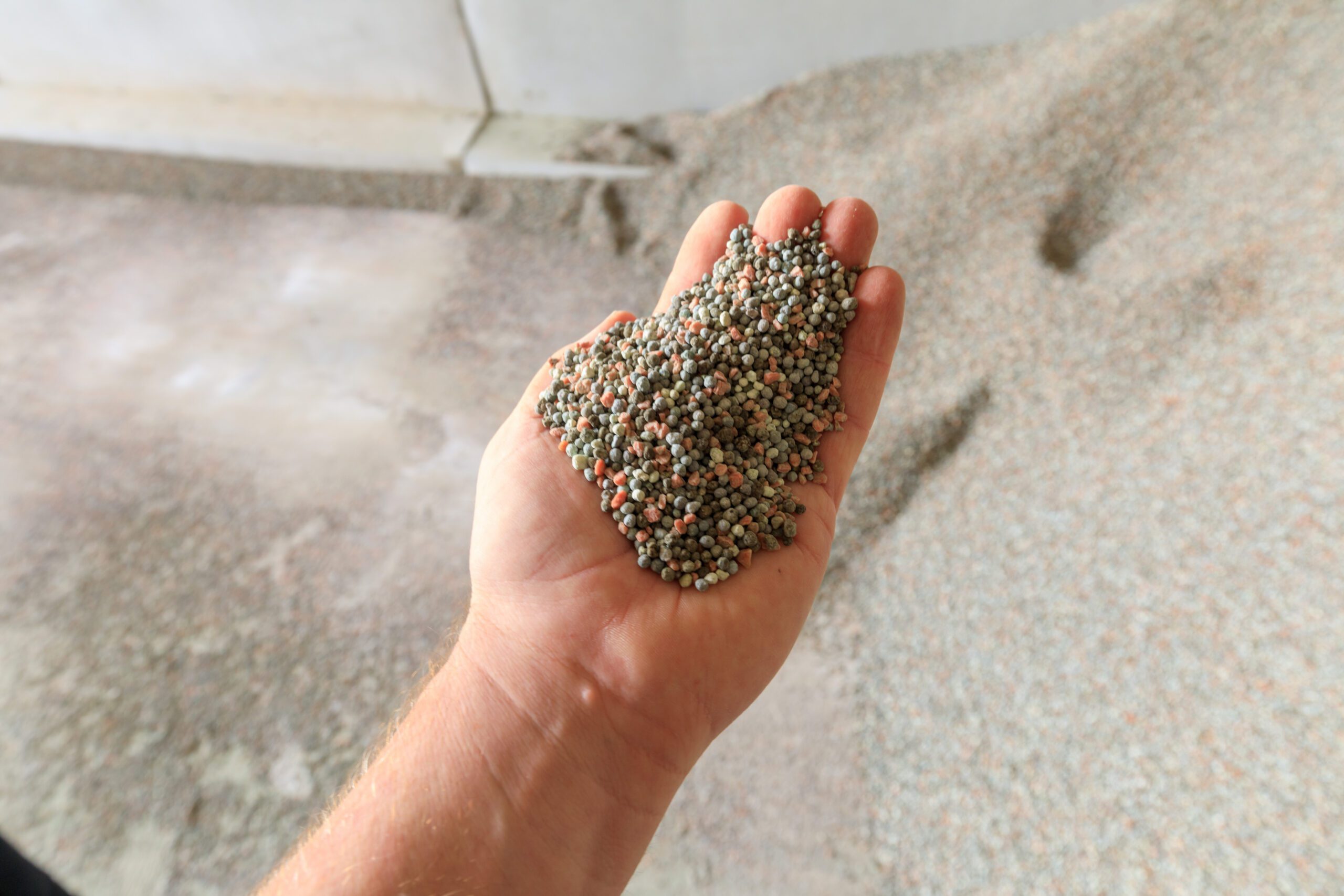
Fertiliser
If 2026 has taught us anything, it’s that fertiliser markets can change quickly.
Many growers entered 2026 believing fertiliser prices would ease. Instead, geopolitical events, export restrictions and supply interruptions pushed prices higher and reminded us how quickly global markets can change.
As planning begins for 2027, growers are once again faced with the challenge of balancing price risk and supply risk. While nobody can predict exactly where markets will move from here, understanding the factors currently influencing fertiliser pricing may help growers put a sound purchasing strategy in place.
To better understand where fertiliser markets may head in 2027, Planfarm spoke with Peter McEwen from Agri-Access WA, who brokers around 350,000 tonnes of fertiliser annually across approximately 250 farm clients in Western Australia.
Nitrogen
Nitrogen is currently the market offering the greatest opportunity to secure product at mid-range pricing.
- Urea available around $850/t.
- UAN available around $660/t for early fills with deferred payments.
- Expectation is for market to stabilise then maybe increase.
Prices remain well below the peaks seen earlier this year, although not as cheap as those seen in early 2024. On balance, they still appear attractive given the volatility experienced in recent years.
Although the market expectations for Nitrogen are to stabilise, it is still subject to variability. The key risks include Chinese export restrictions (as seen in March/April 2026) and continued disruption to Russian export infrastructure due to the war.
While we can’t predict where nitrogen prices will be in six months’ time, current prices may present an opportunity to lock away a portion of next seasons nitrogen requirements.
Potash
Unlike nitrogen and phosphates, potash has been a comparatively steady story.
- Expected price of around $790/t.
- It is a relatively stable price, despite the tight supply.
- Market expectations are for modest price increases over time.
Potash prices remain below the levels seen in early 2022 and only slightly above those available at the beginning of 2026.
Given market expectations, there does not seem to be the urgency to contract fertiliser that may exist for other products. Potash is still affected by global supply chain disruptions and hedging a portion of the following seasons requirements may be a sound strategy.
Phosphates
Phosphates are currently the most concerning fertiliser product looking ahead to 2027, with MAP pricing being the highest it has been over the last 6 years.
- MAP price of approximately $1,450/t.
- Prices are expected to remain at current levels due to tight supply of a key raw material in phosphate production.
- The conflict in the middle east and restrictions on trade in the strait of Hormuz are a significant influence on price.
The major driver behind phosphate pricing is sulphur, which accounts for approximately 40% of the cost of MAP production. Over the past year, sulphur prices have risen sharply due to disruptions in global supply.
Russian refinery attacks, uncertainty surrounding shipping through the Strait of Hormuz, reduced production from major suppliers and ongoing Chinese export restrictions have all contributed to the current market conditions.
Market expectations are for prices to remain around current levels. Much will depend on when normal trade resumes through the Strait of Hormuz and sulphur supply improves. If current restrictions persist beyond the end of the year, a significant correction in phosphate pricing appears unlikely.
This creates issues when trying to strategise on purchases for 2027. Historical pricing would suggest that caution be taken, however the supply risks can not be ignored. The strategy going forward may be to keep having discussions with your fertiliser supplier, and if concerned surrounding supply, hedge some of 2027’s product.
Summary
In summary, there is no single “right” strategy that fits every business. However understanding risk, your finances, weighing up opportunities, and having a plan in place will all assist you in making the best decision surrounding fertiliser for 2027.