
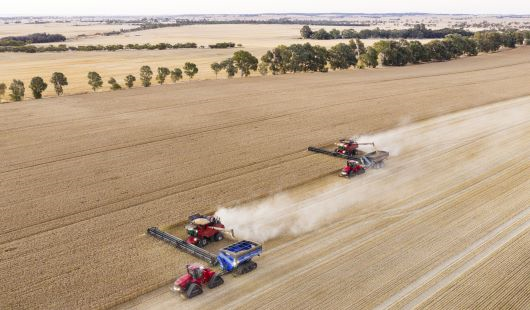
Harvest is when the year’s work comes off the paddock, and it is one of the busiest times of the year. Many things need to happen at once, and one of the most important is turning that crop into money by selling the grain.
Every crop that reaches harvest has a plan behind it, and grain marketing is no different. A grain marketing plan is just as important as an agronomy plan and should be in place before the season begins. It covers how much grain to forward sell, when, at what price, on what payment terms, and how the plan needs to adjust as the season unfolds.
This article focuses on the harvest period and the practical things to consider during it.
1. Know your cash flow needs
Start by working out what cash you need at harvest and in the months that follow. This includes seasonal facilities that need paying down, interest payments, delayed payment terms, and harvest costs. Listing these items and their due dates gives you a clear starting point for the rest of your plan.
2. Check delivery conditions and grade spreads
Almost every grain contract has a delivery period, and missing it is a common trap. A late harvest, a shortage of trucks, or a missed nomination on CBH Loadnet can all cause problems, so plan your deliveries and nominations well before the delivery window closes.
Grade spreads are also important in maximising the value of each load. They determine how much each load is worth, so make sure you capture the full value for every tonne. For grain you intend to hold, consider the risks and opportunities in grade spreads, and compare them with the cash market and other options such as pools.
3. Understand the cost of holding grain
If you don’t sell at harvest and choose to hold grain, the key figure is the cost of carry. For every day you hold grain, the price needs to rise enough to cover the interest you lose on the sale proceeds plus any storage costs.
Free storage is offered in some systems, including CBH and Bunge. That period eventually ends, so know when it finishes and what charges apply after that.
If grain is stored on farm, include the costs of intake and outturn, fumigation, and the time you spend monitoring the store.
Interest is easy to overlook because you never receive an invoice for it. It is a missed opportunity, but it can still be calculated:
- Take the price you could have sold at when you decided to hold.
- Multiply it by your interest rate to get the annual cost per tonne.
- Divide by 365 to get the daily cost per tonne, then multiply by the number of days you hold the grain.
Example: grain worth $350/t, an 8% annual interest rate, and 90 days held. $350 × 8% = $28 per year. $28 ÷ 365 × 90 days ≈ $6.90/t. Storage costs and the value of your own time would be added on top.
You may also want to factor in the value of your time spent managing the position.
4. Manage the post-harvest puzzle
Managing grain through harvest and the post-harvest period is like solving an ongoing, multi-dimensional puzzle. You have different loads to nominate against existing contracts, a market where prices and grade spreads are constantly moving, and a range of selling alternatives or the choice to hold. Each decision affects the others.
All of this requires a plan, and the time and focus to carry it out. Doing it well lets you concentrate on getting the crop in on time.
How Planfarm can help
Planfarm Grain Marketing works with growers on each of the issues covered in this article:
- Cash flow planning: identifying harvest and post-harvest cash requirements and their timing.
- Contract management: tracking delivery periods and nominations so that contracts are met on time.
- Grade spreads and selling options: comparing cash, pool and other marketing alternatives.
- Cost of carry: modelling the cost of holding grain so that decisions to store or sell are based on numbers.
Our aim is to take the complexity out of harvest marketing so you can focus on bringing the crop in.
