
In last month’s article, Harvest Your Data, Not Just Your Crops: Carbon Prep for 2026, my colleague Toby walked you through what farm data is collected to calculate your farm emissions and how to prepare for it.
So, what’s next? How does Planfarm TerraWise turn all that collected data into your custom annual carbon account? Today, I’ll give you a peek behind the scenes.
Step one: Farm data collection
The ease of this step mainly depends on your record-keeping, especially if you use farm management software like AgWorld, JD Ops, Mobble, or AgriWebb, particularly when you update the farm plan with actuals.
After your kick-off session, we will collect initial farm data from your records or your farm management software and then schedule another in-person meeting to clarify any uncertainties.
We know your farm data often ends up scattered across apps, spreadsheets, and the good old notebook. Pulling it all together takes time, time that is often better spent running your business. So, we have been developing an application to streamline this process, also known as Carbon Data Survey. Our goal is to collate your data and prefill as much as possible, so your role is mostly to check the data, not compile or create it.
If you are an existing Planfarm client, we will use the data from your annual review to avoid duplicate input. Because Planfarm collects data from you at the farm level, we then also seek commodity-level inputs. We can automatically pull this data from your farm management software into your survey. That means even less manual entry for you. Of course, we only access your software with your permission.
All your data is securely stored on a third-party service provider, Amazon Web Services (AWS). We won’t dive deep into AWS here (there are plenty of resources if you want to explore the matrix), but it is safe and secure.
And do not worry if your data is not down to the commodity level, we will use industry assumptions to fill in the gap and examine how we can improve data accuracy year-on-year.
Step two: Checking and sorting your farm data
Once your data is collected, the next step is to ensure it’s accurate, complete, and fit for purpose for your carbon report.
Here’s how it typically works:
- We download your records from either your software and records or your completed online farm data survey.
- We check for any odd values. For example, have a few extra zeros been added in the wrong place, are some application rates missing, or are stock numbers not adding up?
- We check in if anything looks off. If something does look off, we will reach out to you to double-check. This back-and-forth continues until everything looks good to go.
- We sort your farm data to the commodity level. This is where the most useful carbon insights start to appear. Emission calculators don’t automatically do this, so we prep your data so we can dive into the different areas of your business.
- Ready for reporting. With everything checked and sorted, your farm data is fed into our reporting system to build your carbon account.
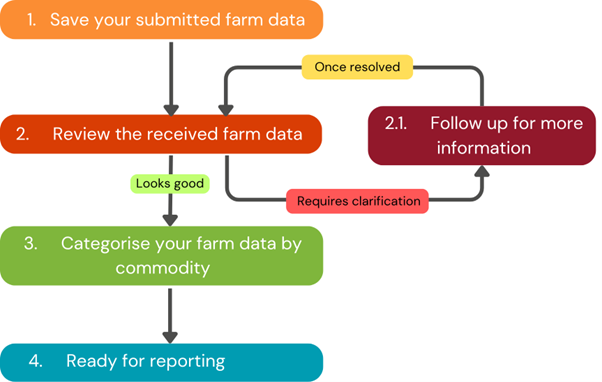
Figure 1. Overview of the Data Processing Workflow: From Download to Reporting
Step Three: Turning your farm data into your carbon report
To convert your farm data into emissions data, we send it through a secure connection called an API (I wrote an article on this earlier this year) maintained by Agricultural Innovation Australia (AIA). AIA have recently been nominated by the Federal Government as the go-to standard for emissions calculation in Australian agriculture, which you can read more about here or in the official announcement.
Suppose you’re curious about what happens to your farm data. In that case, AIA takes your farm data and processes it through their backend calculator, producing raw emissions data that we then refine into a report. AIA does not retain or store any of your information. This is a straightforward transaction: your farm data is submitted, calculations are performed, and the emissions results are sent back directly.
These results will be brought into your carbon report. Each report will provide tailored insights, unique to you and your operation.
Wrapping it up
Simply put, each phase, collecting, analysing, and reporting your data, contributes to the accuracy and value of your carbon account. The bottom line is that your results will only be as accurate as the information you start with, so putting in the effort early on really pays off.